
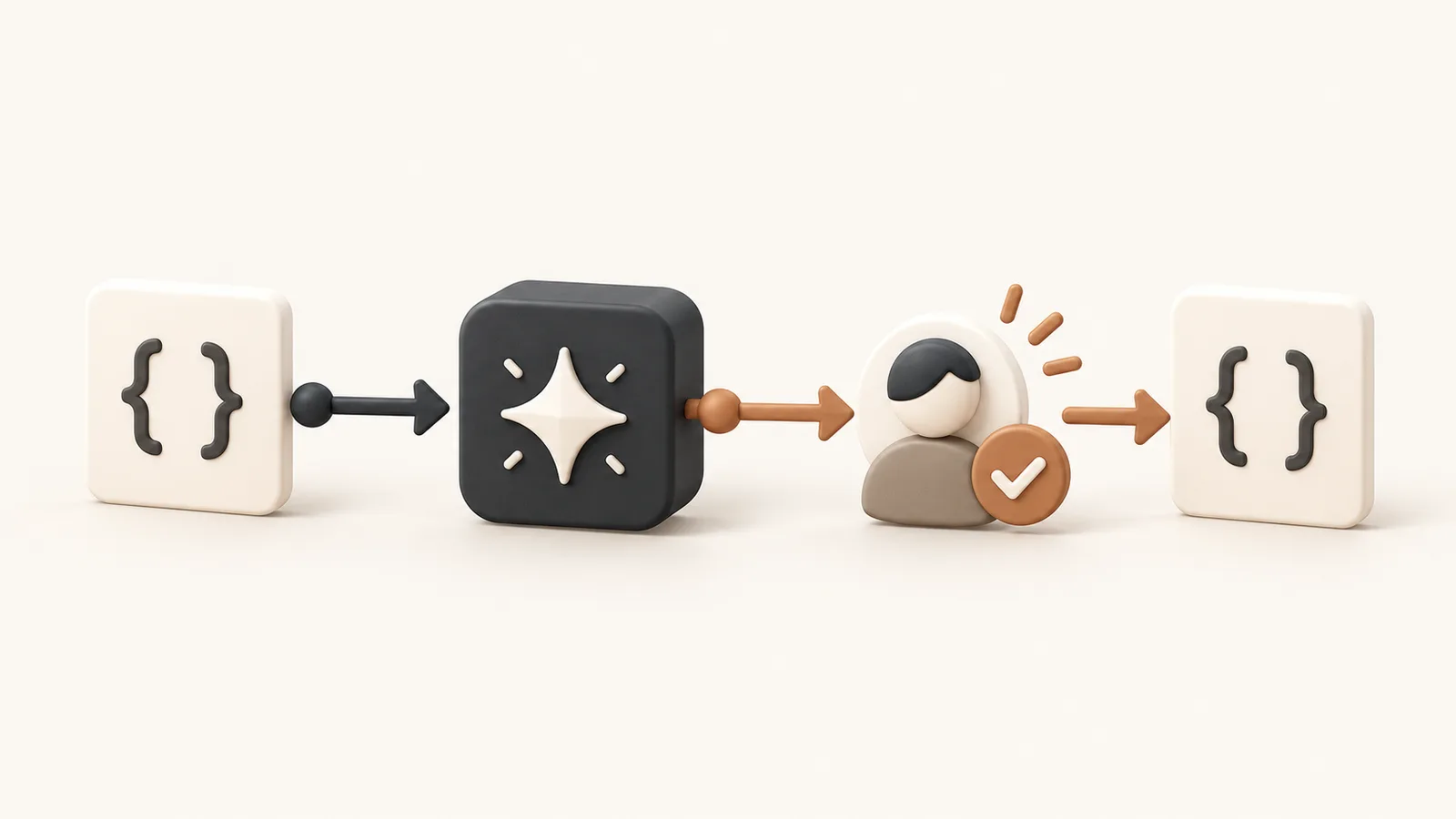
- Idea
- Work with AI
- Professional review
The tool helps develop the idea. Professional judgment guides the decisions and the review.
Being able to start has real value
When I talk about vibe coding here, I mean building something by asking an AI for changes and trying what it returns. I see value in that approach for exploring an idea: it gives you something to look at and helps you discover what’s missing. A conversation around an actual screen can be much clearer than an idea that’s still hard to explain.
I don’t think starting this way takes anything away from someone’s effort. I like seeing more people create things and get a better understanding of technology. I also think it matters to recognize what that first version is ready for. An experiment for learning and a tool a business depends on need different kinds of care.
Some decisions don’t show up on the screen
Imagine you need a tool to prepare quotes. You ask an AI for a form with products, prices and a button to generate the document. The first test goes well and you have something to show. It’s easy to feel that the work is almost finished.
Before using it with customers, I’d want to answer some other questions: who can change a price? What happens if a tax is wrong? Is the quote the customer accepted preserved when the catalog changes later? Those answers require understanding how the business works. AI can help me build around them once I’m clear about what needs protecting.
Experience helps me ask better questions
I use AI in my development work. Part of my contribution is providing context and reviewing its proposal, but it also involves deciding what to ask for. If a quote needs approval before it goes out, I’d rather clarify that rule before spending time on how the button looks. A solution can be well built and still solve the wrong problem.
For me, experience includes recognizing when I need to ask. Years of programming don’t let me guess how every company operates. Listening to the person doing the work, checking my assumptions and changing my mind when new information comes up are part of my responsibility. The tool is more useful to me when I give the work that attention.
It can be a way to learn, too
If you’re starting out, my advice would be to follow your curiosity: ask for an explanation of a change, read what you can understand and try what happens when something goes differently than expected. If the answer is still confusing, look for another explanation or ask someone experienced to review it. Understanding a little more of what you’re building gives you a better basis for deciding what to do next.
I don’t want to stop learning just because an answer is available, either. If I accept a proposal without understanding it, I’ll have a harder time explaining why it’s there or fixing it when the need changes. I’d rather use that first answer as a starting point for something I can understand and maintain.
Someone will be trusting the result
Before handing over the quoting tool, I’d go through the process with the person who will use it: preparing a quote, correcting it, approving it and finding an earlier one. I’d also review permissions and what to do if information is lost. I want that person to know how to continue when the day doesn’t go as planned.
That’s why I see room for AI and for a professional who knows how to use it. I’m excited about what I can explore with these tools, and I care about keeping the same attention in the work I deliver. Someone trusting me with a project expects a useful solution, decisions they can understand and someone who takes responsibility for what they build. That’s the part of my work I want to keep doing well.