
- Document
- Evidence
- Clinical review
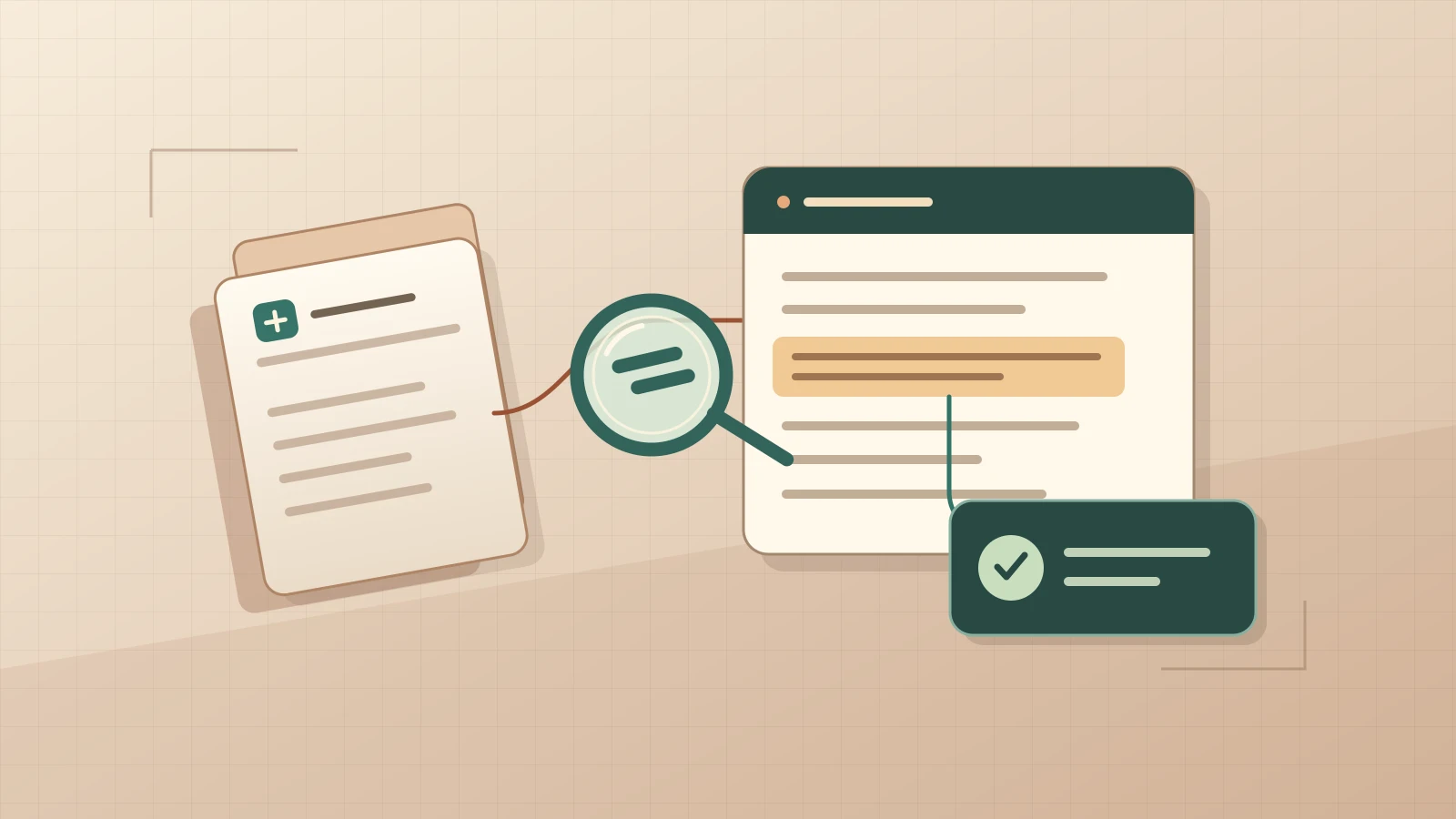
Search brought the document to the team. The review determined whether it documented care.
I put the document at the center of the workflow
I worked on the pipeline that brought clinical documents in through CommonWell. Some material arrived as structured data. Other documents would otherwise have taken someone a page-by-page read. For clinical formats like FHIR and C-CDA, the pipeline could use the structure already present. When the information was in an image or a scanned PDF, OCR helped recover text so it could be searched as well.
As a developer, I wanted the rest of the system to work with material from different sources. A date could come from a structured field or appear in the text of a report. Either way, it was useful only if it could be related to the right document. Processing made the content easier to search, and the document remained the reference for the review.
Search narrowed down what the team needed to read
I worked on using RAG, or retrieval-augmented generation, so the assistant could use information retrieved from the documents to prepare an answer. Retrieval found passages related to the question. The generative step helped pull together key points that the doctor could review with that context at hand.
In the screening example, the test might be mentioned in an order, a recommendation, or a result. All three could be relevant to the search. For the person reviewing the gap, the distinction was whether a document showed that care had been delivered or simply that it had been requested. That’s why the original document still mattered after extracting text or generating a summary.
I brought the information to where the decision was made
I also worked on connecting that information to the ERP and the doctor’s assistant inside the patient chat. The team already organized appointments, programs, and follow-ups in the product. Having key points close to that work gave them a concrete place to start before opening the document and checking its context.
As a technical lead, the distinction I cared most about was between retrieving evidence and deciding what to do with it. The system could help identify a document and summarize it. Clinical review determined whether that document was enough to resolve the gap. When the team found evidence that care had already taken place, they could update the record and focus follow-up on the cases that still needed it.
What changed how I thought about the result
It was easy to talk about the pipeline as a series of ingestion, OCR, and search steps. The result I cared about came later, when someone on the team could answer a question with the document in front of them. That moment connected my work on processing to the clinic’s original problem. It also made the outcome clearer: resolving a documentation gap meant finding evidence of care that had already taken place.